
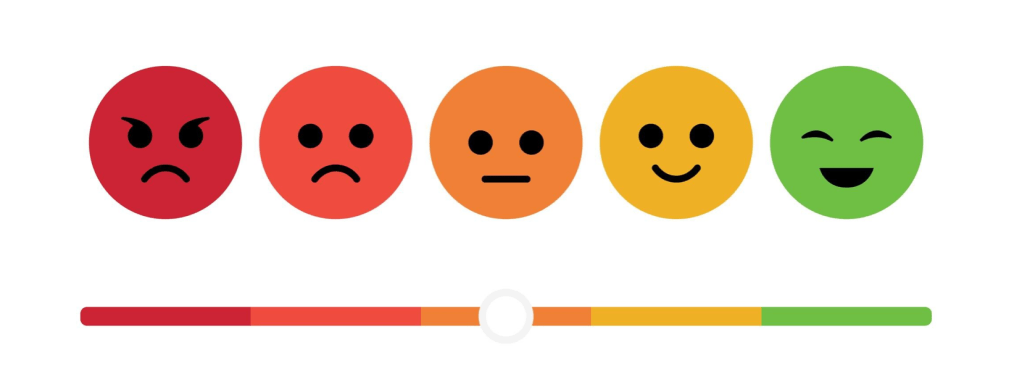
Attention-Deficit/Hyperactivity Disorder (ADHD) is deeply tied to emotional regulation, a challenge that is often overlooked. For many with ADHD, emotions come in fast and intense, like waves crashing without warning. Minor frustrations can feel overwhelming, rejection can sting deeper, and calming down can take much longer than it does for others. This isn’t due to immaturity or lack of effort; it’s rooted in the brain-based differences in how emotions are processed, regulated, and expressed. Struggling with emotional control can impact relationships, self-esteem, and daily function, making life feel like an emotional rollercoaster that’s hard to get off. Understanding this link is essential for compassion, support, and healing. This post covers how emotional regulation is connected to ADHD, what dysregulation could look like, the importance of nervous system regulation, and strategies and tools that can help.
How Emotional Regulation is Connected to ADHD
In my previous post (link to previous post), I discussed how emotional regulation and executive functioning are connected, particularly the areas of the brain related to self-regulation, impulse control, and working memory. Emotional regulation and ADHD are also connected via brain functions, specifically in areas responsible for triggering and processing emotions:
- The prefrontal cortex: important for planning, impulse control, decision making, and working memory.
- Amygdala: processes emotions such as fear, anxiety, and anger.
How do these brain structures relate? Research indicates that there is a decreased activation of the frontal cortex in the ADHD brain, making it harder to control strong emotional reactions; this can result in difficulty responding to feelings in a socially appropriate way (Paulus et al., 2021). Difficulties with emotional regulation are found in 25-45% of children with ADHD, with approximately 50-70% of these children who struggle with interacting with their classmates (Nigg et al., 2020; Sanchez et al., 2019). Children who struggle with interacting with peers experience difficulty with self-control and higher fits of aggression, disruptive behavior, and oppositional defiance starting as early as preschool age (Sanchez et al., 2019).
What Does Dysregulation Look Like?
When children with ADHD experience negative emotions, they are typically trying to communicate with those around them. Dysregulation can occur when feelings such as anger, sadness, or panic are overly intensified or last for a long period of time, with failure to be helpful or productive in the situation. Children with ADHD often express more negative emotions, experience more emotional instability, have difficulty expressing their emotions, and have difficulty reading other people’s emotions compared to their non-ADHD peers (Paulus et al., 2021). Here are some common feelings and behaviors children and adults with adhd may experience when dysregulated:
- Intense Emotional Responses: Overreacting to minor events, experiencing rapid mood swings, and struggling to recover from emotional upsets.
- Behavioral Manifestations: Outbursts of anger, frustration, or sadness, exhibiting irritability and impatience, and engaging in impulsive actions without considering consequences.
Internal Experiences: Feeling overwhelmed by emotions, difficulty identifying emotions, rumination on negative thoughts and feelings, and experiencing intense emotional pain in response to perceived or actual criticism or rejection.
This can be a recipe for disaster for children who are trying to fit in or gain peer acceptance, as they may be seen as noisy, annoying, dramatic, or easy to anger because they cannot recognize the negative effect caused by their behavior (Sanchez et al., 2019). It’s important to remember that emotional self-regulation is a brain issue, not a parenting failure. Many people with ADHD may feel shame around their impulsive reactions or tears; reframing this as a neurobiological process, not a weakness, can truly make a difference in how individuals with ADHD feel about themselves.
Self-Regulation and Nervous System Care
Russle Barkley mentions in his book Taking Charge of ADHD, 4th Edition, that he views ADHD as a disorder of self-regulation. What does that mean? And how does it relate to the nervous system, emotional well-being, and feeling overwhelmed? Although Barkley doesn’t use the term “nervous system regulation”, his work implies it everywhere because self-regulation starts in the body.
When your nervous system is dysregulated, too stimulated, too overwhelmed, or even under-stimulated, it becomes difficult to focus, plan, or calm down. Many individuals with ADHD live in a state of chronic “fight, flight, or freeze,” which takes over the brain’s ability to think clearly, make decisions, and emotionally recover after stressful situations. That is why traditional discipline or “try harder” messages do not work. The brain is not being stubborn; it’s flooded.
According to nerodivergentinsights.com, the vagus nerve plays a massive role in how flexible the nervous system is when it experiences changes in the environment and how it reacts to the change. The reaction to the change is known as the vagal tone. High vagal tones are more flexible, whereas low vagal tones are less flexible and create a rigid nervous system. Individuals with ADHD have a low vagal tone, meaning the nervous system has a small window of stress tolerance (Neff, 2022). However, what goes up must come down! Lowering stress to the nervous system is crucial for regulated emotional and behavioral responses.
How to Refuel the Executive Brain: Nervous System Tools For Home and School
Barkley uses a metaphor in his work that states that your brain’s self-control works like a fuel tank, every act of focus, emotional control, or decision drains that tank. If it runs too low, meltdowns, avoidance, or shutdowns occur. So now, let’s talk about how we can refuel that tank.
| Self-Regulation Strategy | Nervous System Benefit | Tools You Can Try |
| Mindful Breaks | Calms sympathetic arousal | Deep breathing, nature walks, and doodling |
| Movement | Reboots attention and emotional control | Dancing, trampoline, stretching, and fidgeting |
| External Structure | Reduces cognitive load and decision fatigue | Timers, checklists, and visual schedules |
| Positive Emotion | Replenishes self-control and energy | Gratitude journaling, music, and affirmations |
| Naming Emotions | Activates self-awareness and calm | “Name it to tame it” – practice identifying emotions and understanding secondary emotions. |
ADHD isn’t just about attention; it’s about how your brain and body regulate stress, emotions, and time. Holistic supports like mindfulness, movement, and emotional validation aren’t fluff; they are evidence-aligned tools to support the executive function. And remember, you’re not broken, you just need to refuel!
Resources for Parents and Educators
ADDitudue Magazine: Emotional Dysregulation in ADHD
California Department of Education SEL Toolkit: https://www.cde.ca.gov/ci/se/index.asp
CHADD (Children and Adults with Attention-Deficit/Hyperactivity Disorder)
https://chadd.org – Offers webinars, toolkits, and local chapter support groups
Downloadable Zones of Regulation Chart: https://www.socialthinking.com/zones-of-regulation/free-stuff
Mood Meeter: chrome-extension://efaidnbmnnnibpcajpcglclefindmkaj/https://marcbrackett.com/wp-content/uploads/2023/11/Mood_Meter_Marc_Brackett_Permission-to-Feel.pdf
Taking Charge of ADHD (4th edition) – Dr. Russell Barkley
The Center on the Developing Child- Harvard University: https://developingchild.harvard.edu/
Zones of Regulation Curriculum: https://zonesofregulation.com/
References
Barkley, R. A. (2020). Taking charge of ADHD: The complete, authoritative guide for parents (4th ed.). The Guilford Press.
Neff, M. A. (2022, November 15). The autistic and ADHD nervous system. Neurodivergent Insights. nerodivergentinsights.com
Nigg, J. T., Karalunas, S. L., Gustafsson, H. C., Bhatt, P., Mooney, M. A., Faraone, S. V., Fair, D. A., & Wilmot, B. (2020). Evaluating emotional dysregulation and irritability in relation to ADHD and depression genetic risk in children with ADHD. Journal of Child Psychology & Psychiatry, 61(2), 205-214.
Paulus FW, Ohmann S, Möhler E, Plener P, Popow C. Emotional dysregulation in children and adolescents with psychiatric disorders. A narrative review. Front Psychiatry. 2021 Oct 25;12:628252. doi: 10.3389/fpsyt.2021.628252. PMID: 34759846; PMCID: PMC8573252.
Sanchez, M., Lavigne, R., Romero, J. F., & Elosegui, E. (2019). Emotion regulation in participants diagnosed with attention deficit hyperactivity disorder, before and after an emotion regulation intervention. Frontiers in Psychology, 10.

 The Mindful Neurodivergent
Leave a comment